
A thin film on a heated surface
An agitated thin-film dryer uses a rotor to distribute and agitate material on a heated surface. As moisture or other volatile content is removed, the material changes consistency. Dryer configuration and rotor selection depend on the feed and required product.
In selected industrial wastewater schemes, an ATFD is used for final-stage concentrate drying. It is not an automatic fit for every effluent or a substitute for evaluating the whole treatment train.
The surrounding systems matter
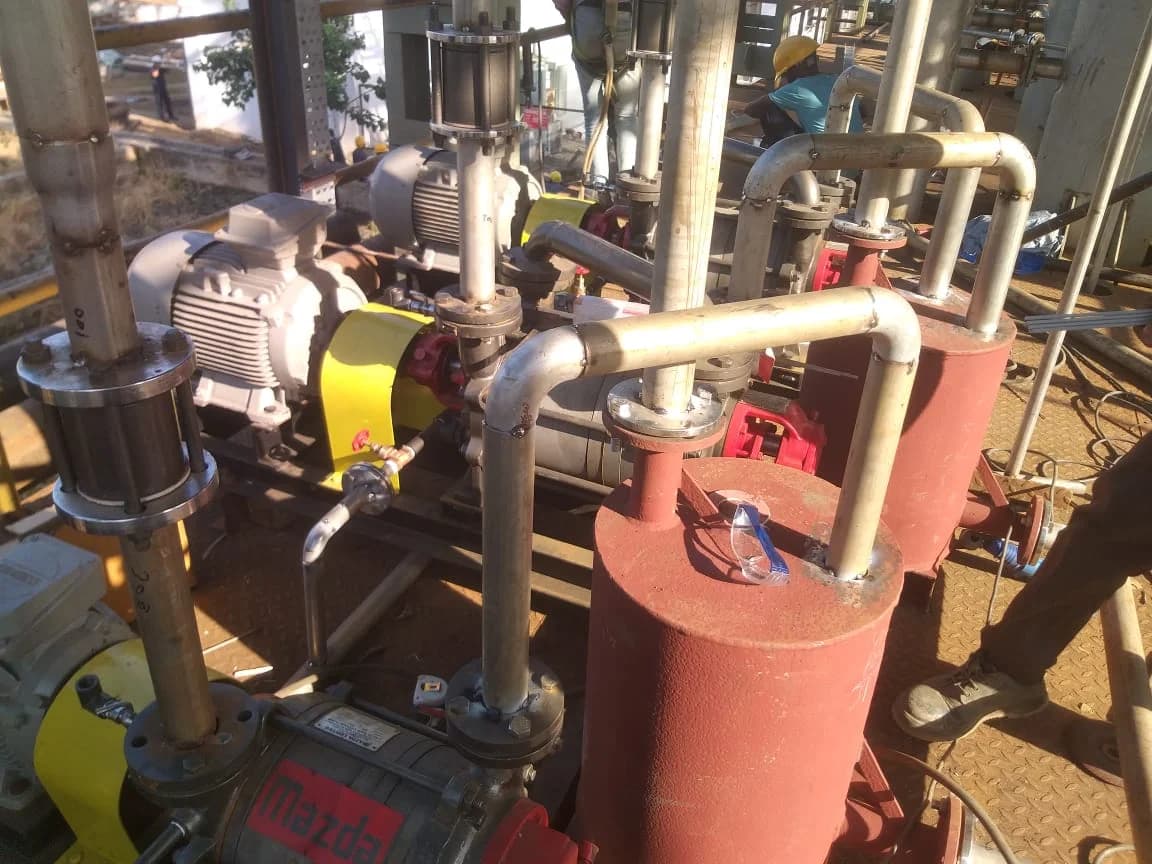
Review the feed arrangement, vapour outlet, condenser interfaces and solids discharge together. Each of these connections needs a defined mechanical scope and enough access for its intended inspection and maintenance tasks.
Before installation, confirm the supplier's dimensional, support and service requirements. The execution team also needs to know what arrives assembled and what must be fitted or connected on site.
Provide a route for maintenance
A compact installation can still be difficult to maintain. The project should identify component-removal space, lifting access and how connected pipework will affect future interventions.
Maintenance work should follow the equipment-specific procedure and an approved scope. Record the parts replaced and the observations made so the next intervention begins with usable information.
Separate process selection from installation
The technology supplier or appointed process engineer establishes suitability and performance requirements. DAHARI can support equipment installation, connected piping, structures, replacement work and maintenance coordination.
Technical references
The following primary sources provide further context on the technologies and planning principles discussed.